Suman Dutta

iLab - Portfolio
Physics+AI
Highlight cover image

Hello World !

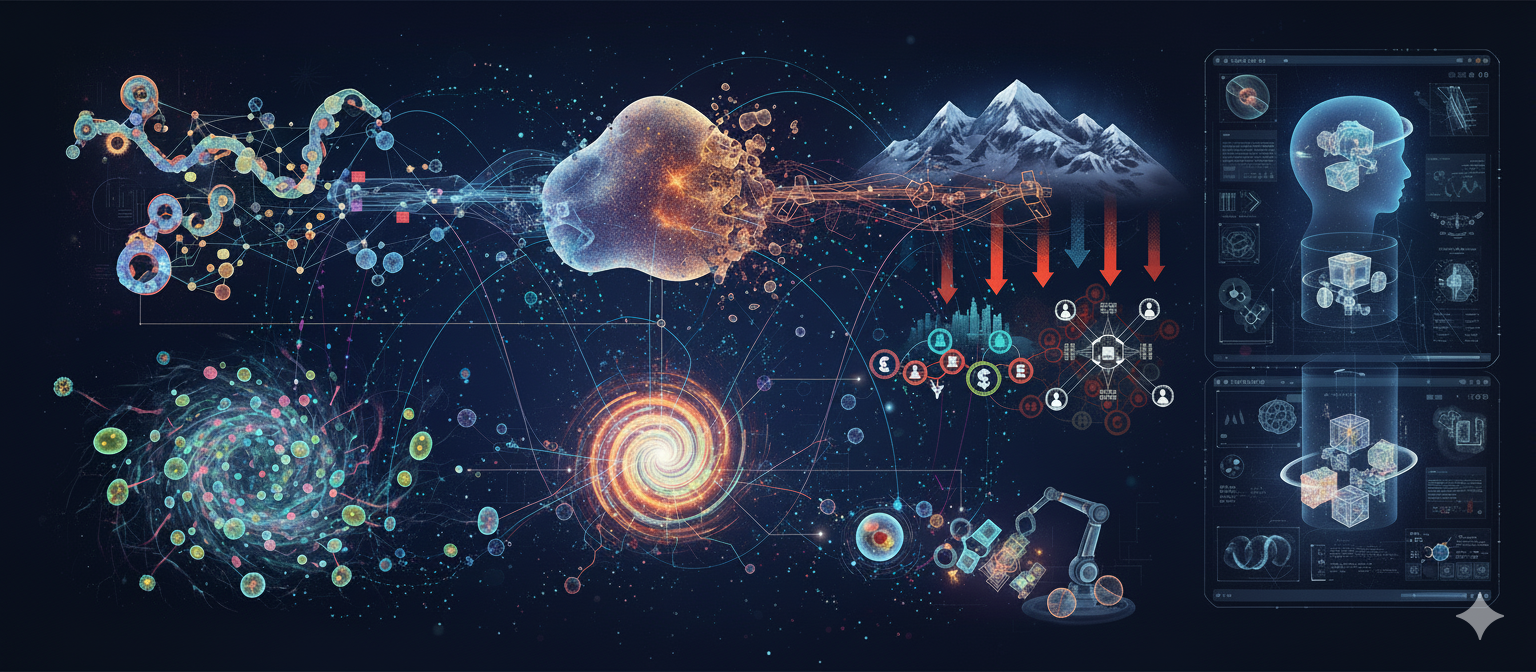
We are a group of creative researchers exploring physics at the interface of artificial intelligence, working in a deeply collaborative and interdisciplinary setting. Our goal is to understand complex systems and to see how modern computational approaches, especially deep learning, can contribute to solutions for societal good. Our main research interests include:

  • Collective Intelligence in Natural and Artificial Systems: How do large groups of individual agents—be they birds in a flock, cells in a tissue, or robots in a swarm—coordinate to achieve complex, group-level goals? We explore the physical principles behind this emergent intelligence, studying how local rules and interactions give rise to sophisticated collective behaviors in both living and engineered systems.
  • Physics of Living Matter: We view biological tissues as a form of active matter. We study the collective migration and self-organization of cells to better understand fundamental processes like wound healing, tissue development, and morphogenesis. By creating computational models that capture the interplay between cellular forces and signaling, we hope to contribute insights that could one day aid in regenerative medicine.
  • Mechanics of Disordered Materials: Materials like glasses and granular packings lack a perfect crystal structure, which makes predicting their behavior, particularly failure, a difficult challenge. We investigate the fundamental mechanics of these systems, applying machine learning techniques to identify subtle structural precursors to failure. Our goal is to contribute to a more predictive science of materials, which is essential for designing more resilient and safer structures.
  • AI as a Tool for Scientific Discovery: A common thread through all our research is the use of deep learning not just for prediction, but as a tool for gaining fundamental insight. We are committed to developing simple models by machine intelligence (MI). We aim to uncover the underlying physical principles our models have learned, helping us to formulate new hypotheses and deepen our understanding of the complex natural systems we study.

We thrive on a close partnership with experimentalists and other theorists, creating a dynamic environment for learning and discovery.

🌟 Highlights

  • Research Interests: Investigating the dynamics of natural and artificial complex systems, with a focus on out-of-equilibrium soft, glassy, and active matter.
  • Physics at the Interface of AI: By training models from physical systems, we integrate fundamental physical laws into novel AI models. This involves using high-performance computing and explainable AI to decode molecular information processing, predict material failure, and attempts to understand emergent behaviors in living and artificial systems.
  • Teaching and Mentoring: Engaged in teaching courses such as Mathematics for AI and Intelligent Systems, and mentoring research interns and graduate students.

🌟 Join Us

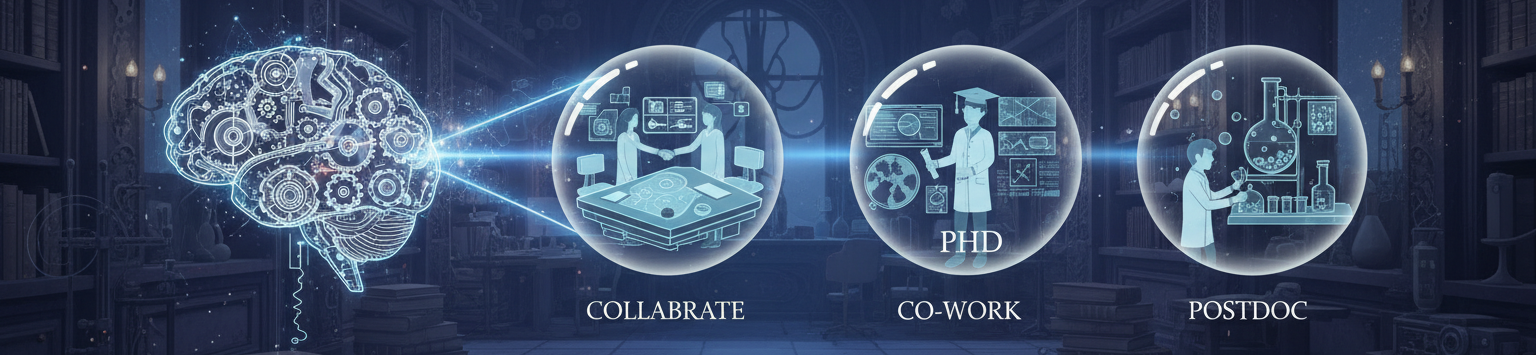
Join Us Graphic

🔬 Research Interests & Competencies

Research Expertise

  • Domain Expertise: Collective Intelligence in Living and Artificial Systems, Physics of Complex Fluids, Soft Condensed Matter.
  • Core Competencies: Creative Research, Out-of-Equilibrium Statistical Physics, Machine Learning Order Disorder.
First highlight cover image Second highlight cover image

Key Research Areas

  • Soft, Glassy, Active & Adaptable Matter
  • Physics of Flow, Glass & Living Machines
  • Material Failure and Molecular Information Processing
  • Mechanobiology, Catastrophe Science, Emergent Intelligence

Extensive Experience in

  • Soft Condensed Matter
  • High Performance Computing (Molecular Simulations)

Research within the Group

We perform extensive computer simulations, harnessing the power of High-Performance Computing (HPC), alongside statistical methods. Our aim is to develop and deploy data-driven yet inherently explainable techniques. These methods are meticulously designed to systematically investigate the intricate complex processes that drive autonomous organization and the phenomena of failure in both living and artificial systems. Our approach bridges the gap between complex data analysis and fundamental scientific understanding, ensuring our findings are not only predictive but also interpretable.

Our research endeavors delve into several key directions, offering a comprehensive exploration of complex systems:

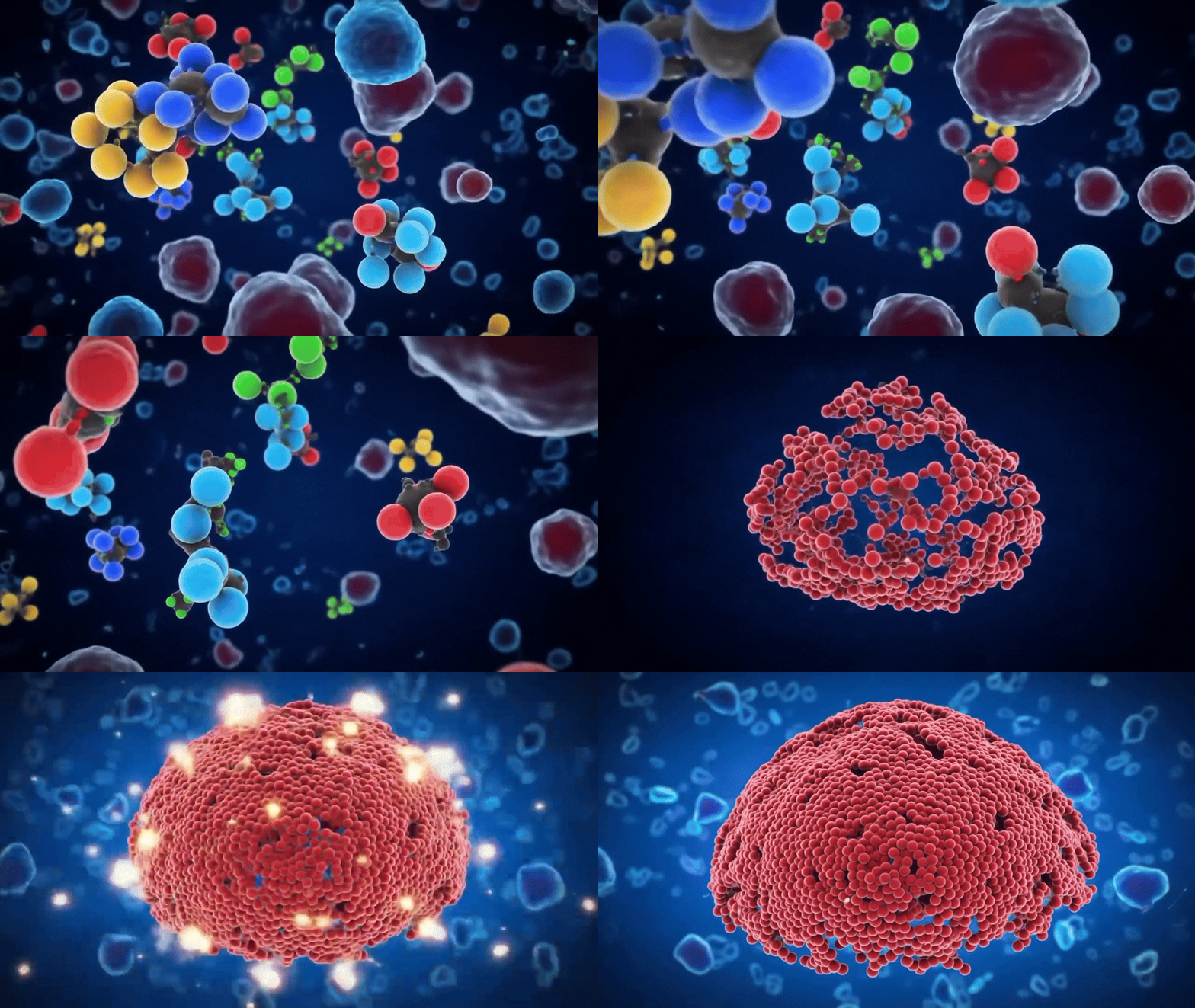
  • Molecular Information Processing: We meticulously decode how molecular systems store, manipulate, and relay information. This involves unraveling the fundamental principles that govern adaptive behaviors observed in both natural biological networks and synthetic molecular constructs. By understanding these intricate mechanisms, we aim to engineer more sophisticated and responsive artificial systems.
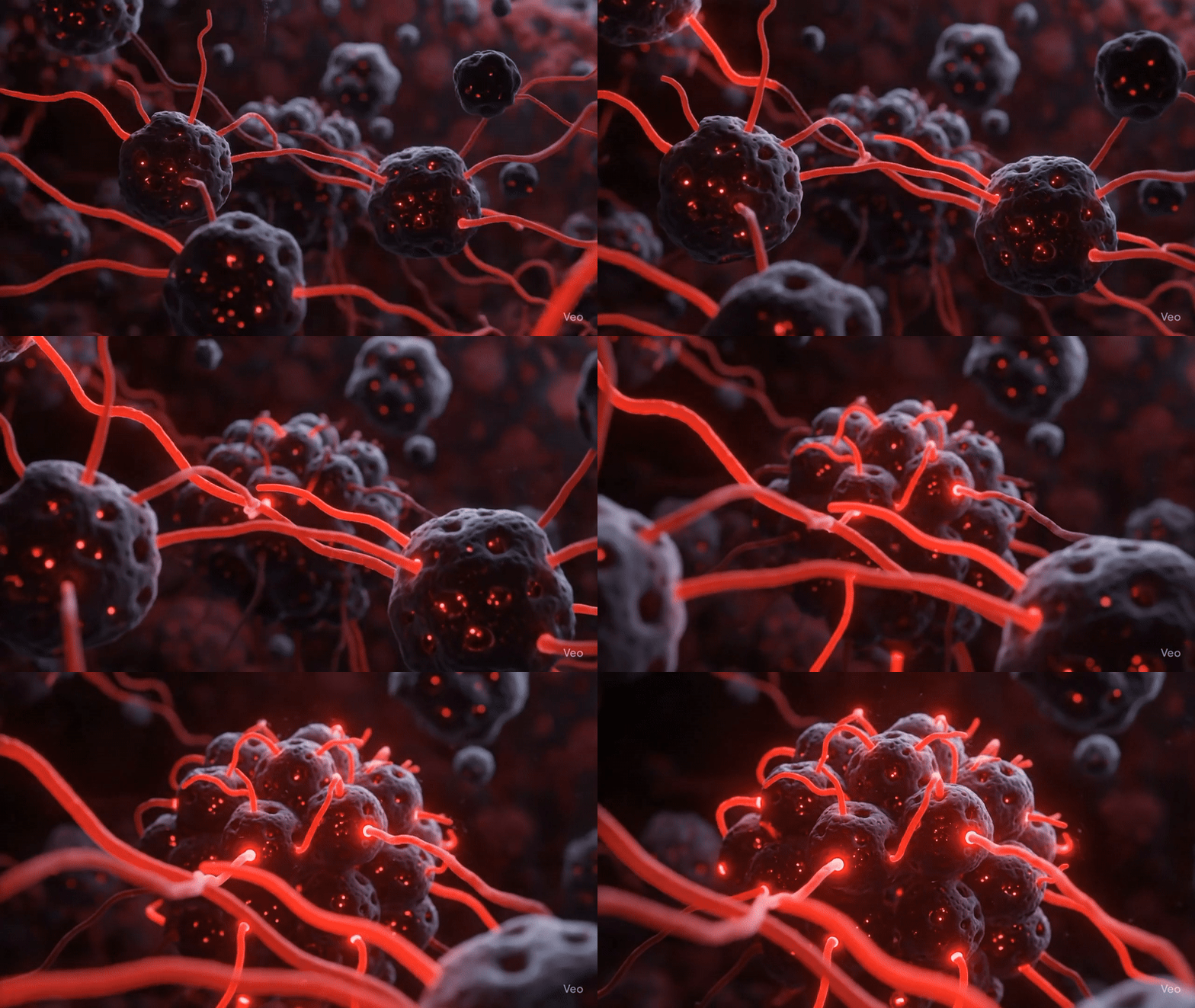
  • Cellular Migration and Turbulence: We investigate the often chaotic and dynamic patterns exhibited by migrating cells. This research focuses on understanding their collective dynamics during critical biological processes such as tissue formation, repair, and in cases of failure. By analyzing these complex movements, we gain insights into emergent behaviors and the underlying physical constraints.
  • Failure and Jamming of Amorphous Systems: A significant area of our work explores the transitions of disordered materials between fluid-like and rigid states. We aim to develop predictive models that can accurately forecast their resilience, pinpoint critical points of failure, and understand the jamming phenomena that can lead to material collapse.
  • Predicting Vulnerability and Avalanches: We develop models that capture the dynamics of critical cascades—phenomena ranging from natural avalanches to the interconnectedness of economic societies. Our goal is to forecast the likelihood and potential impact of systemic failures, thereby enabling proactive mitigation strategies.
  • Autonomous and Critical Phenomena in Living and Artificial Systems: We are deeply interested in the emergence of self-organized behaviors in systems poised at critical thresholds. By studying these systems, we aim to uncover the delicate balance between stability and adaptability, and how these seemingly opposing forces coexist to drive complex system evolution.
  • Generative Physical Intelligence: We are pioneering the development of novel generative models that are deeply integrated with the fundamental laws of physics. This research aims to create AI systems capable of not only predicting but also generating physically plausible dynamics and structures. By teaching models the principles of statistical mechanics and emergent phenomena, we seek to build intelligent agents that can autonomously discover new materials, understand system failures, and generate innovative solutions to a complex physical challenges.

📚 Publications

2025

S. Santra, L. Touzo, C. Dasgupta, A. Dhar, S. Dutta, A. Kundu, P. Le Doussal, G. Schehr & P. Singh, Crystal to liquid cross-over in the active Calogero-Moser model, J. Stat. Mech. 033203 (2025) [LINK]

Contribution: Contributing author

V. Vaibhav, T. Das & S. Dutta*, Persistently Non-Gaussian Metastable Liquids, arXiv:2511.07951 (2025) [LINK]

Contribution: Corresponding author

S. Dutta*, P. Chaudhuri, M. Rao & C. Dasgupta, Activity-driven sorting, approach to criticality and turbulent flows in dense persistent active fluids, arXiv:2509.00376 (2025) [LINK]

Contribution: First and Corresponding author

2024

V. Vaibhav & S. Dutta*, Entropic timescales of Dynamic Heterogeneity in Supercooled Liquid, Phys. Rev. E (Lett.), 109, L062102 (2024) [LINK]

Contribution: Corresponding author

2023

S. Dutta, K. Martens & P. Chaudhuri, Creep response of athermal amorphous solids under imposed shear stress, arXiv:2303.04718 (2023) [LINK]

Contribution: First author

2021

C. Liu, S. Dutta, P. Chaudhuri & K. Martens, Elastoplastic approach based on microscopic insights for the steady state and transient dynamics of sheared disordered solids, Phys. Rev. Lett., 126, 138005 (2021) [LINK]

Contribution: Joint first author

2020

R. Dandekar, S. Bose & S. Dutta*, Non-Gaussian information of heterogeneity in soft matter, Europhys. Lett., 131, 18002 (2020) [LINK]

Contribution: Corresponding author

S. Dutta* & J. Chakrabarti, Length-scales of dynamic heterogeneity in a driven binary colloid, Phys. Chem. Chem. Phys., 22, 17731 (2020) [LINK]

Contribution: First and Corresponding author

2019

S. Dutta*, Microscopic insights into dynamical heterogeneity in a lane forming colloid, Chem. Phys., 522, 256 (2019) [LINK]

Contribution: Solo author

2018

S. Dutta* & J. Chakrabarti, Transient dynamical responses of a charged binary colloid in an electric field, Soft Matter, 14, 4477 (2018) [LINK]

Contribution: First and Corresponding author

2016

S. Dutta* & J. Chakrabarti, Anomalous dynamical responses in a driven system, Europhys. Lett., 116, 38001 (2016) [LINK]

Contribution: First author

2015

J. Chakrabarti & S. Dutta, Analytical form of forces in hydrophobic collapse, Chem. Phys. Lett., 620, 109 (2015) [LINK]

Contribution: Second author

💡 Teaching & Mentoring

Courses Taught

  • Mathematics for Intelligent Systems, 23MAT106, First Semester, B. Tech (AI and Data Science Core), School of Artificial Intelligence, Amrita Vishwa Vidyapeetham (Fall, 2025) .
  • Mathematics for AI, School of Artificial Intelligence, Amrita Vishwa Vidyapeetham, Bootcamp (AI & Data Science Core) .
  • Research Methodology: S. N. Bose National Centre for Basic Sciences.

Mentoring Experience

  • Research Intern: A. Jagdish, School of Physical Sciences, Amrita Vishwa Vidyapeetham (06/2025 onwards)
  • Student Collaborators: A. Harish, A. Venkatraman, Department of Mathematics, Amrita Vishwa Vidyapeetham (06/2025 onwards)
  • Masters Thesis Co-supervision: Magnus Olsen, Understanding Non-Newtonian Materials (Supervisor: R. Cabriolu, Norwegian University of Science and Technology (since 08/2025)

Group Leader

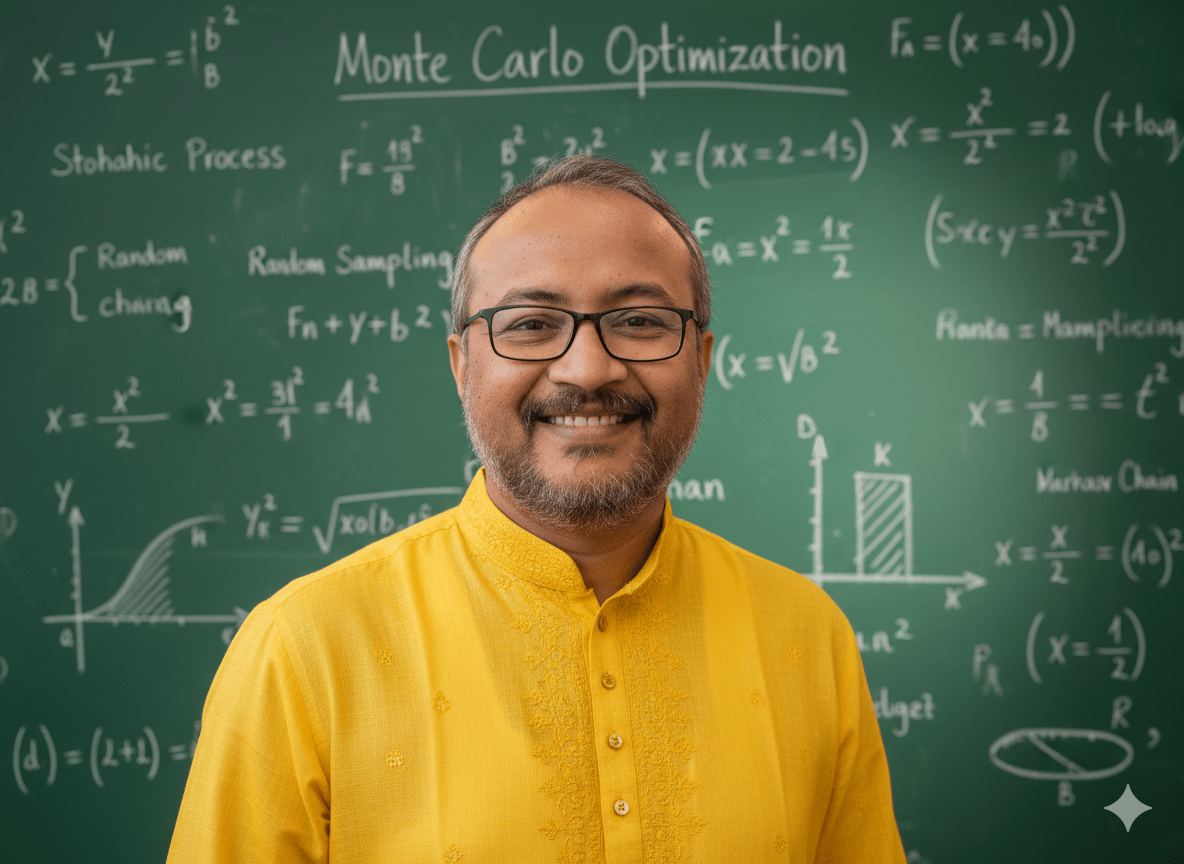
Profile Picture

Suman Dutta

Researcher | Intelligent Living & Artificial Systems

About Me

I am a Creative researcher in the field of Intelligent Complex Systems, with a specialization in out-of-equilibrium Complex Fluids. I investigate model dynamics of Natural and Artificial Systems, combining Statistical Physics, High Performance Computing and Machine Intelligence, with an aim to develop strategies for Generative Physical Systems.

🎓 Professional Journey

Present Affiliation

Faculty Member, Department of Artificial Intelligence
School of AI, Amrita Vishwa Vidyapeetham, Coimbatore HQ
Joint Coordinator (Academic), B.Tech Programme (AI-Quantum Technology) (Since 03/2025)

Professional Research Experience

  • Post Doctoral Fellow (01/2024 – 09/2024)
    Simons Centre for the Study of Living Machines, National Centre for Biological Sciences - Tata Institute of Fundamental Research, Bangalore (Advisor: M. Rao)
  • Post Doctoral Fellow (01/2021 – 12/2023)
    International Centre for Theoretical Sciences - Tata Institute of Fundamental Research, Bangalore (Advisor: C. Dasgupta)
  • Post Doctoral Fellow (02/2018 – 12/2020)
    The Institute of Mathematical Sciences, Chennai (Advisor: P. Chaudhuri, in collaboration with K. Martens)

Visiting Researcher Experience

  • Fluvial Mechanics Laboratory Indian Statistical Institute (Kolkata, IN)
  • Department of Physics Indian Institute of Science (Bangalore, IN)
  • Department of Physics Indian Institute of Science Education and Research (Bhopal, IN)
  • Laboratoire Interdisciplinaire de Physique Universit´e Grenoble Alpes (Grenoble, FR)
  • Institut f¨ur Theoretische Physik II - Soft Matter Heinrich-Heine-Universit¨at (D¨usseldorf, DE)

Education

  • Ph.D in Physics (08/2012 – 01/2018)
    Department of Chemical, Biological and Macromolecular Sciences, S. N. Bose National Centre for Basic Sciences, Kolkata (Degree awarded by University of Calcutta)
    Thesis: Numerical Studies on the Dynamics of Soft Matter Systems (Advisor: J. Chakrabarti)
  • M.Sc in Physical Sciences (08/2010 – 07/2012)
    S. N. Bose National Centre for Basic Sciences (Degree awarded by West Bengal University of Technology, Kolkata)

📫 Connect

✨ Latest News

September 2025

September 24: Archit Selected for the flagship Biophysical Meeting at ICTS-TIFR Program

Archit has been selected for on-campus participation in the flagship- international meeting "Spatial Organization of Biological Functions", organized by the Biophysical Society, at ICTS-TIFR, scheduled for October 20-25. He will also present a poster on his work, "Learning Micro-Flocking Dynamics in Living Machines by Hybrid Machine Intelligence."

September 22: Agnevesh’s Research Tenure Extended

We are pleased to announce that Agnevesh's research tenure has been extended for an additional three months following a positive recommendation from a review panel.

September 15: ANRF Grant Proposal Advances

Our grant proposal, titled "Learning Order-Disorder by Machine Intelligence," has been successfully accepted for technical evaluation.

August 2025

August 30: New Preprint on Dense Persistent Active Fluids

Our latest preprint, "Activity-driven sorting, approach to criticality and turbulent flows in dense persistent active fluids," is now available on arXiv. This collaborative work can be accessed at: arXiv:2509.00376.

August 4-15: Agnevesh Participates in ICTS-TIFR Flagship School

Congratulations to our intern, Agnevesh, for his selection to participate in the prestigious flagship school "Data Science: Probabilistic and Optimization Methods II", held online by ICTS-TIFR.

July 2025

July 12: Archit to Present at ICAMGT – 2025

Congratulations to our student collaborator, Archit, whose research on "Machine Learning Material Heterogeneity at Micro-scale" has been accepted for an oral presentation at the International Conference on Advanced Materials and Green Technology (ICAMGT – 2025).

June 2025

June 2: Manuscript Submitted to Annalen der Physik

A new manuscript titled "Persistently Non-Gaussian Metastable Liquids" was submitted to *Annalen der Physik*.

May – June 2025

May 28: Research Visit to ISI-Kolkata

Suman made a research visit to the Fluvial Mechanics Laboratory at the Indian Statistical Institute (ISI), Kolkata.

March 2025

March 24: Joined Amrita Vishwa Vidyapeetham

Dr. Suman Dutta commenced his appointment as Assistant Professor (Sr. Gd.) at the School of AI, Amrita Vishwa Vidyapeetham, Coimbatore.

🧑‍🏫 Live Class Room

🔒 Access Restricted

Please enter the passcode to view course materials.

🧪 Lab Products

🤖 Aadri 2.0: Conversational AI for Customary Profiles

AADRI – An Intelligent Conversational AI for Academic Profiles (v2.0)

🔹 Team

  • Lead Developer: Dr. Suman Dutta, School of AI, Amrita Vishwa Vidyapeetham
  • Quality Testing: BTech AID (Core) students
  • Consultants & Reviewers: Experts from TCS, Cognizant, and University of Luxembourg

🔹 Project Synopsis

AI system engineered for the interactive presentation of academic profiles. Utilizing the Google Gemini engine and Retrieval-Augmented Generation (RAG) architecture, it transforms static information base into dynamic, query-driven user experiences. The platform ensures heightened accuracy, engagement, and personalization in professional digital self-presentation.

🔹 Colloquial Abstract

Aadri can be conceptualized as an intelligent assistant that articulates your academic contributions with the fluency of an informed colleague. Rather than navigating a conventional, static document, users engage through direct inquiry, receiving precise and user-centric responses. It functions as a personalized navigational tool for one's research portfolio, pedagogical experience, and professional accomplishments.

🔹 Purpose

  • To make academic profiles interactive, accessible, and engaging.
  • To help users (students, collaborators, institutions) explore a researcher’s work through natural conversation.
  • To set a new standard for how academics present themselves digitally.

🔹 Mobile Demonstration 📱

Evaluate the application's real-time conversational capabilities on the go: Test Aadri 2.0 Live

📝 AtoGRAD: OMR Solutions for Class-based Tests

AtoGRAD is an innovative Optical Mark Recognition (OMR) solution designed to streamline and automate the grading process for classroom-based tests. More details coming soon!

🔹 Team

To be announced.

🔹 Abstract

Details about the technology and application will be available shortly.

🔹 Purpose

  • To provide a fast, accurate, and cost-effective OMR solution for educators.
  • To reduce the manual effort and time spent on grading multiple-choice exams.
  • To offer instant analytics and performance reports for students and instructors.

🤝 Research Collaborators

Jaydeb Chakrabarti
(Senior Professor, S N Bose National Centre for Basic Sciences, Kolkata, IN)
Pinaki Chaudhuri
(Professor, The Institute of Mathematical Sciences, Chennai, IN)
Kirsten Martens
(CNRS Researcher, University of Grenoble Alpes, Grenoble, FR)
Chandan Dasgupta
(Honorary Professor, Indian Institute of Sciences, Bengaluru, IN)
Madan Rao
(Senior Professor, National Centre for Biological Sciences -TIFR, Bengaluru, IN)
Vinay Vaibhav
(Post Doctoral Fellow, University of Goettingen, DE)
Raffaela Cabriolu
(Associate Professor, Norwegian University of Science and Technology, NO)
Tamoghna Kanti Das
(Assistant Professor, WPA-NanoLSI - Kanazawa University, JP)

🏆 Awards & Recognition

  • Best Oral Presenter at the Condensed Matter and Statistical Physics Symposium, Presidency University (August 2024).
  • Visiting Research Grant from the Indo-French Centre for the Promotion of Advanced Research (IFC-PAR/CEFIPRA) (2019, 2018).
  • Post BSc Integrated PhD Research Fellowship (2010-18).
  • National Merit Scholarship (2004).
</body> </html>